


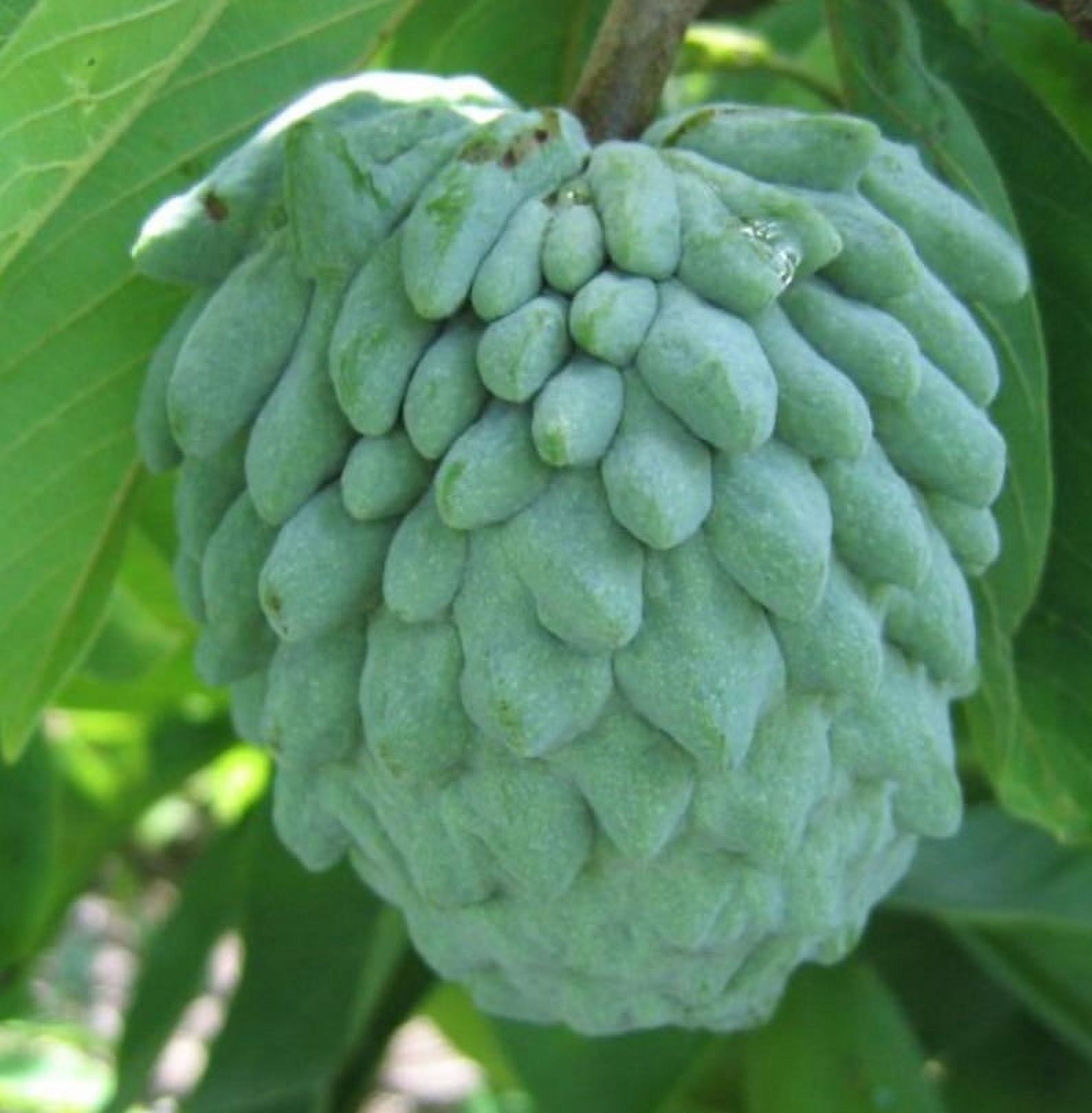
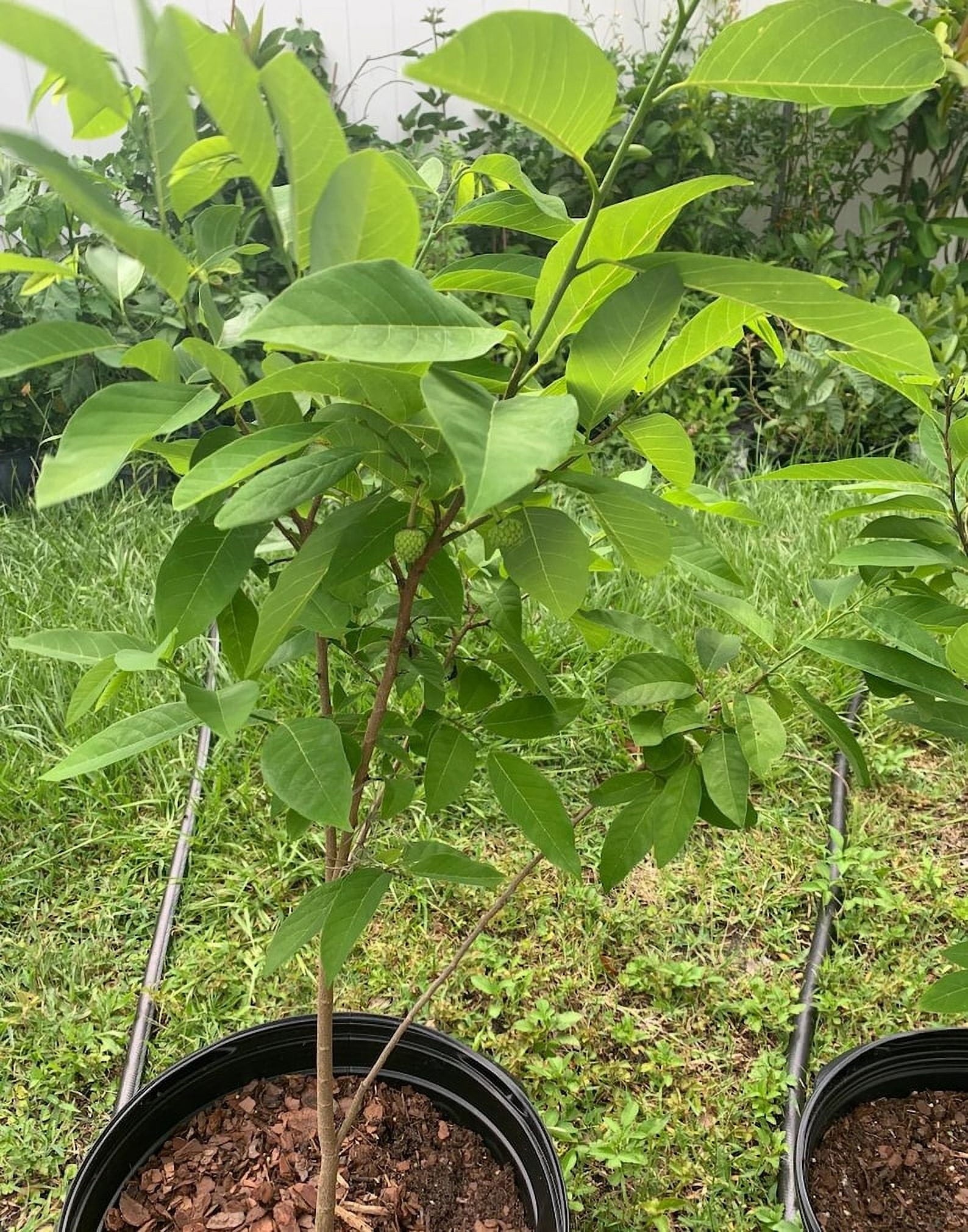
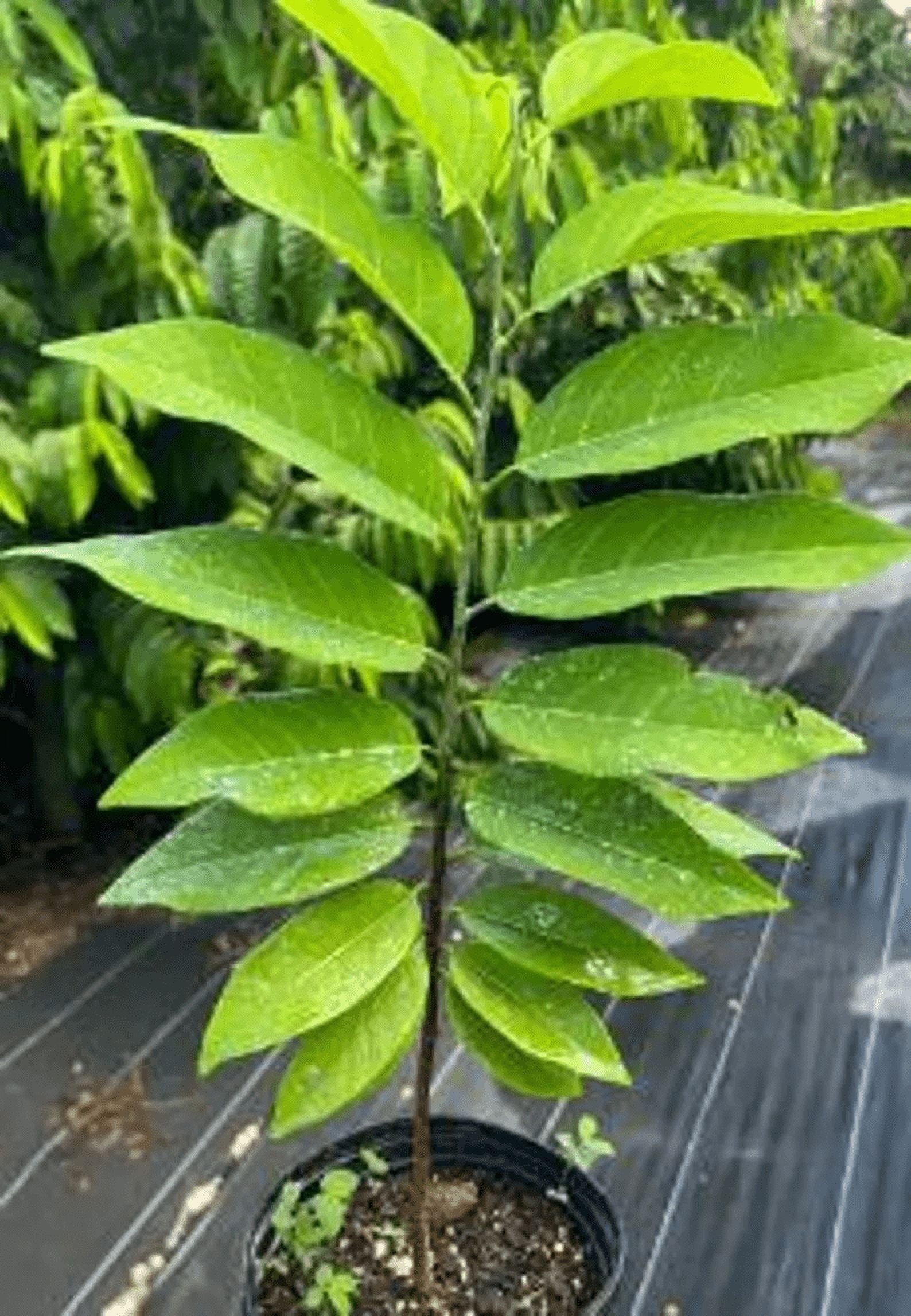
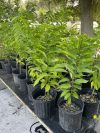
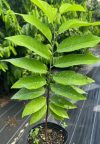
The atemoya is an exceptional “dessert quality” fruit. I count it as one of my favorite tropical fruits. There is a difference between many kinds of fruit that taste good, for example an apple or banana, and a dessert fruit. I don’t consider apples or bananas as being in the dessert category. The atemoya on the other hand can be scooped out with a spoon, leaving several black seeds behind, and has the smell, flavor, sweetness and texture that make it more in the category of ice cream and a delicious ending to top off a great meal.
Atemoya is a cross between a sugar apple (A. squamosa, native to the tropical lowlands) and the cherimoya (A. cherimola, native to the cooler Andean highlands). The result is that the atemoya has a little more cold tolerance than the sugar apple and thrives in the cooler subtropical climate of SW Florida.
The fruit has fairly thin skin and black seeds. The pulp is white, creamy, yet soft, sweet, and delicious. Atemoya fruit are usually eaten fresh, but also make a great milk shake and tasty sherbet. Be sure to remove all the seeds before putting the pulp into a blender as the seeds contain several toxic alkaloids.
- : Produces sweet, creamy fruit with a custard-like texture and tropical hints of vanilla and pineapple.
- : Ensures faster fruiting and consistent, high-quality harvests.
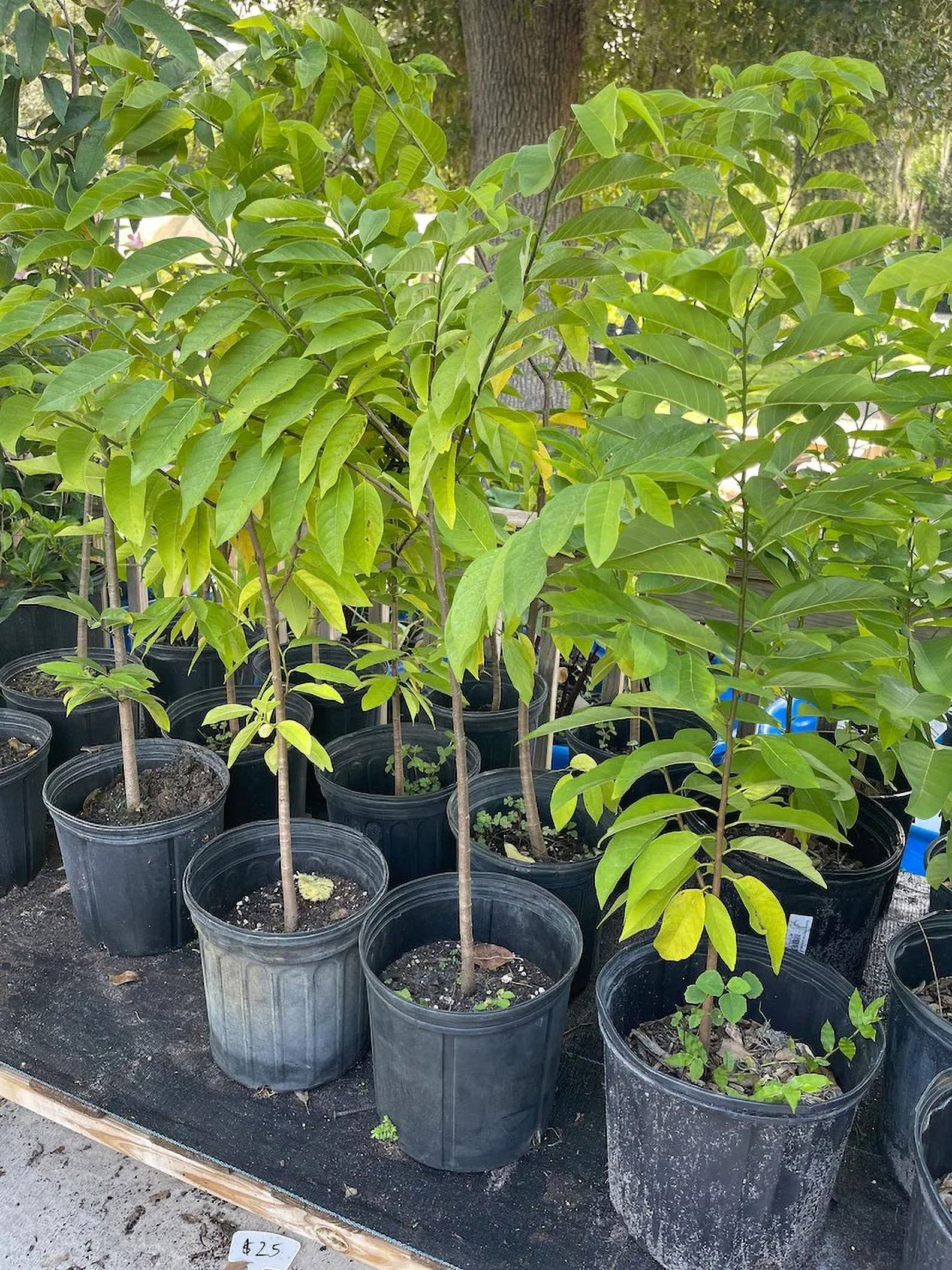
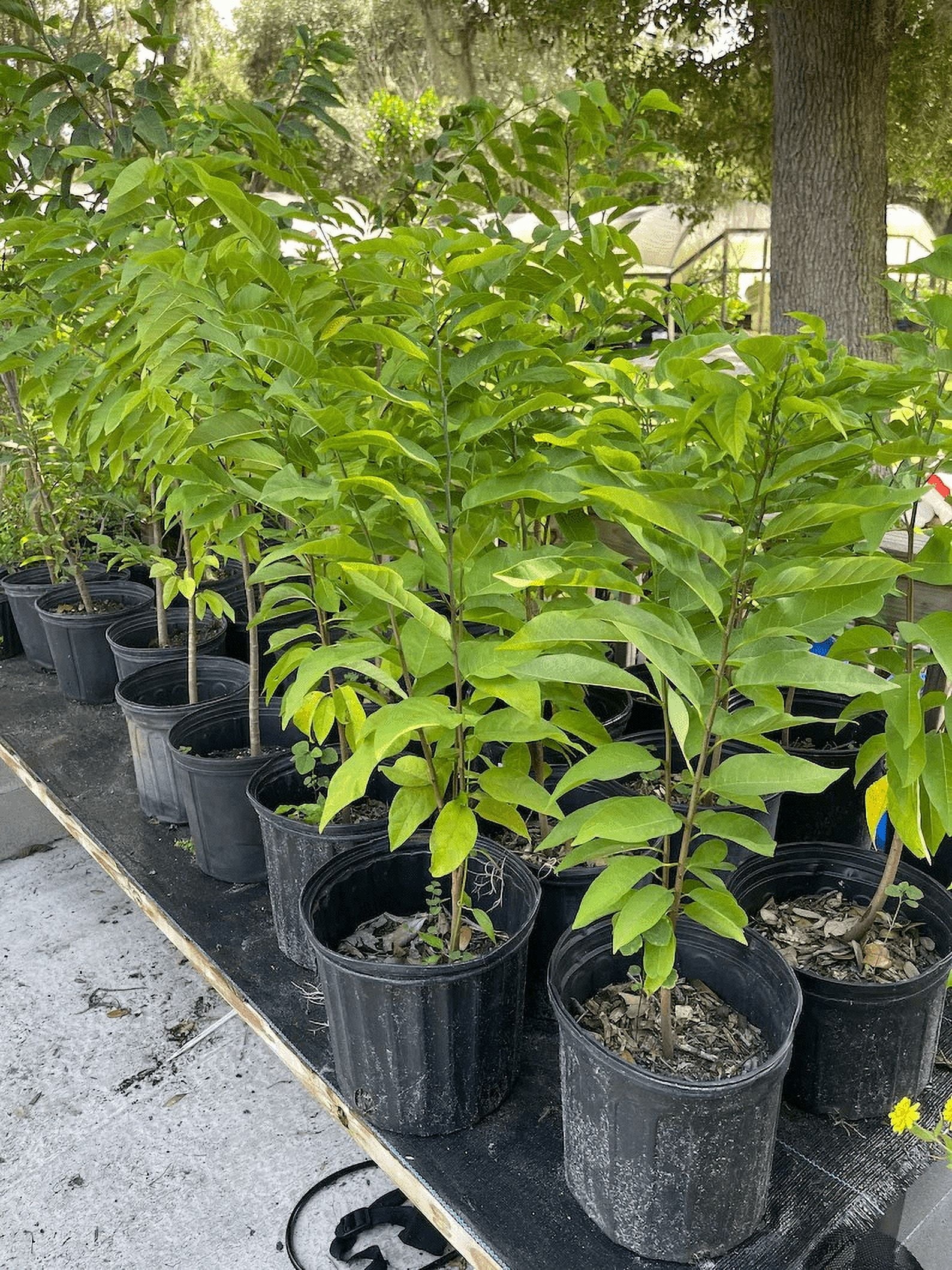
- : Delivered at a healthy size, ready for planting.
- : Thrives with full sun, moderate watering, and well-draining soil.
- : Yields abundant fruit with proper care and conditions.
- : Features lush green foliage and fragrant, eye-catching flowers.
- : Suitable for gardens, patios, or container planting.
- : Best suited for USDA Zones 9-11, with frost protection in cooler areas.
- : Packed with vitamins, antioxidants, and dietary fiber.
- : Carefully packaged to ensure safe and healthy delivery.